


Medical Disclaimer: This content is for informational and educational purposes only and does not constitute professional medical advice, diagnosis, or treatment. Always seek the advice of your physician or other qualified health provider with any questions you may have regarding a medical condition.
Written by Dr. Himanshu Gupta (Orthopedics & Robotics, Amicare Hospital ↗).

🏥 Medical Review Board Member
Dr. Himanshu Gupta
Orthopedic Specialist | Amicare Hospital (Ghaziabad, India)
Dr. Himanshu Gupta is a distinguished medical professional with over 20 years of expertise in orthopedics and joint replacement surgery. As the Chief Orthopedic and Director at Amicare Hospital, he specializes in advanced robotic-assisted procedures and sports injury management, dedicated to enhancing mobility and quality of life for his patients. Dr. Gupta is committed to bridging the gap between complex surgical clinical practice and accessible, evidence-based patient education. His rigorous approach to medical oversight ensures that every piece of content he reviews meets the highest standards of clinical accuracy, safety, and reliability.
Total knee replacement can be life-changing. Pain often eases. Sleep improves. Walking becomes possible again. But the first weeks after surgery are also when the top 5 mistakes after knee replacement tend to happen, and those errors can slow healing, increase discomfort, or even threaten the long-term success of the implant.
In our medical editorial work, when reviewing patient recovery patterns and post-operative guidance from orthopedic teams, we repeatedly see the same preventable problems. Most are not dramatic. They are small choices made at home. Skipping exercises. Doing too much on a “good” day. Ignoring swelling. Stopping a walker too early. Missing a follow-up because everything seems fine.
That is why understanding the dos and don’ts after knee surgery matters so much. Recovery is not only about time passing. It is about following the right steps, in the right order, with patience. If you are also reading about How to Sleep After Hip Replacement or wondering Why Does My Knee Click But No Pain, you already know that joint recovery often depends on habits that seem minor but are not.
This guide breaks down the common mistakes after knee replacement surgery, what they can lead to, and what to do instead. It is written for patients and caregivers who want practical, trustworthy advice grounded in widely accepted medical guidance.
Why recovery mistakes matter more than many people expect
A knee prosthesis is built to restore function, but the surrounding muscles, ligaments, skin, and soft tissue still need time to heal. That is where many early recovery mistakes knee arthroplasty patients make can interfere with progress.
Most studies agree on a few key recovery principles:
- Early movement helps prevent stiffness
- Swelling control supports mobility
- Pain management improves participation in rehab
- Fall prevention protects the new joint
- Follow-up care helps catch complications early
The knee replacement recovery timeline can vary, but structured rehabilitation is consistently associated with better function. The first six to twelve weeks are especially important. That window often sets the tone for how well the knee bends, straightens, and supports daily life months later.
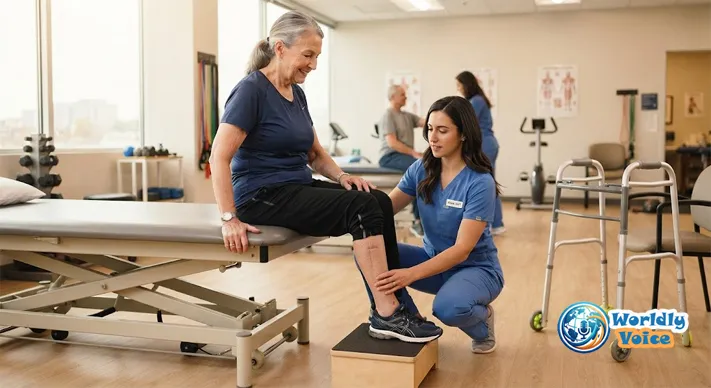
1. Skipping physical therapy or abandoning home exercises
This is one of the top 5 mistakes after knee replacement, and it is more common than families expect.
The mistake
A patient feels sore after a rehab session. Or tired. Or discouraged because the knee still feels tight. So exercises get delayed for a day. Then another. Soon, the routine fades.
Sometimes the opposite happens. A person attends formal physiotherapy but neglects the daily home plan, assuming the clinic visits alone are enough.
Why it matters
After surgery, the knee naturally wants to stiffen. Scar tissue forms as part of healing. Without regular stretching and strengthening, that tissue may limit motion. The result can be:
- Reduced range of motion
- Trouble climbing stairs
- Ongoing swelling and weakness
- Difficulty getting the knee fully straight
- Delayed return to walking normally
In clinical discussions around physical therapy after knee replacement, one pattern stands out: patients who stay consistent usually regain function more smoothly than those who wait for the knee to “loosen up on its own.”
What to do instead
Treat rehab like a prescription, not a suggestion.
- Follow the schedule from your surgeon or physiotherapist
- Do home exercises even on days when motivation is low
- Report sharp pain or unusual swelling, but do not stop the plan without advice
- Focus on small gains, such as a few more degrees of bend or a smoother walk
A simple real-world example: one patient may skip exercises for three days because the knee feels stiff. Another does gentle stretching, icing, and walking as instructed despite discomfort. By week four, the second patient often has better motion and more confidence.
If you need support during joint recovery, related topics like Knee Support for Meniscus Injury may also help you understand how stability and movement work together across different knee conditions.
2. Doing too much, too soon
When people ask what not to do after total knee replacement, overexertion is near the top of the list.
The mistake
The pain improves a bit. Energy returns. Suddenly, it feels reasonable to vacuum the house, walk much farther than usual, carry groceries, or test the knee with squats, ladders, or yard work.
This often happens in week two, three, or four. Patients are not fully healed, but they are feeling just well enough to overestimate what the knee can tolerate.
Why it matters
Healing tissue does not respond well to sudden stress. Pushing too hard can lead to:
- Increased swelling
- More pain at night
- Setbacks in range of motion
- Limping or altered gait
- Stress on the implant and surrounding tissue
Overactivity is one of the classic common mistakes after knee replacement surgery because it can look like motivation. But recovery is not a race. It is more like building a bridge one section at a time. If you drive heavy traffic across it before the supports are ready, the structure strains.
What to do instead
Progress should be gradual and clinician-guided.
Safer low-impact options often include:
- Short, frequent walks
- Stationary cycling if approved
- Prescribed strengthening work
- Gentle mobility drills
- Pool-based activity only after wound clearance
The dos and don’ts after knee surgery generally emphasize pacing, safe mobility, and staged rehabilitation. If an activity causes swelling that lasts into the next day, that is often a sign you did too much.
Quick guide: safe progress vs risky overexertion
| Recovery situation | Safer choice | Riskier choice |
|---|---|---|
| Feeling good one afternoon | Take a short walk, then rest and ice | Deep clean the house for two hours |
| Wanting to build strength | Follow therapist-approved exercises | Try lunges, jogging, or jumping |
| Swelling increases after activity | Elevate, ice, and scale back next time | Push through pain and repeat the same workload |
| Returning to chores | Resume light tasks in stages | Lift heavy laundry baskets or move furniture |
| Unsure about activity level | Ask surgeon or physiotherapist | Assume no pain means full healing |
3. Mismanaging pain medicine and swelling control
Pain control is not just about comfort. It is part of functional recovery.
The mistake
Some patients wait until pain becomes intense before taking prescribed medicine. Others stop medication early because they are worried about dependence or side effects, without discussing a taper plan. A few also forget the non-drug basics: icing, elevation, hydration, and rest.
Why it matters
Uncontrolled pain can limit walking, reduce sleep, and make physical therapy after knee replacement much harder. At the same time, stopping certain prescribed medicines too early, especially blood-thinning medication when indicated, may increase the risk of complications such as clotting.
Swelling matters too. Many people underestimate it. But if the knee remains very swollen, bending and straightening become harder, and the entire knee replacement recovery timeline may feel slower.
What to do instead
Use a layered approach.
- Take medication exactly as prescribed
- Ask your care team before changing the schedule
- Ice the knee regularly if advised
- Elevate the leg correctly
- Stay hydrated and eat enough protein for healing
- Track your symptoms so patterns are easier to spot
For many patients, learning how to reduce swelling after knee surgery is just as important as pain control itself. Swelling is not always dangerous, but persistent or rapidly worsening swelling deserves attention.
In some cases, warning signs after knee surgery include calf pain, sudden warmth, chest symptoms, or fever. The warning signs after knee surgery that may point to a blood clot should never be ignored.
4. Ditching assistive devices early and using poor body mechanics
This mistake often comes from pride, not carelessness.
The mistake
A patient decides the walker feels unnecessary. Or the cane feels embarrassing. Or they start twisting while turning, sinking into a low sofa, crossing legs, or resting with a pillow directly under the knee for long periods.
Why it matters
Balance after knee surgery is not only about the knee joint. It also depends on pain, muscle strength, reaction time, and confidence. Stopping support too early raises the risk of a fall. That is one of the most serious common complications after knee arthroplasty.
Poor positioning can also create problems. Keeping the knee bent for long stretches may contribute to stiffness and contracture. Twisting can stress healing tissues. Low chairs make standing harder and can place extra strain on the joint.
What to do instead
Think safety first, independence second.
- Use the walker, cane, or crutches until your clinician says you can stop
- Choose firm chairs with arms
- Keep walkways clear of rugs and cords
- Avoid twisting on the surgical leg
- Rest with the leg supported as instructed, not forced into a bent position for hours
This point is especially important for people who have had prior knee instability, falls, or related symptoms such as a Loud Pop in Knee Followed by Pain before surgery. Previous mobility problems can shape post-op confidence and movement habits more than patients realize.

5. Ignoring red flags or skipping follow-up appointments
This final point completes the top 5 mistakes after knee replacement because even a strong recovery can go off course if warning signs are missed.
The mistake
Everything seems fine, so the follow-up gets postponed. Or a patient notices redness, drainage, fever, severe calf tenderness, or a sudden increase in pain and decides to “watch it for a few days.”
Why it matters
Some serious problems start subtly. Infection, deep vein thrombosis, wound issues, and mechanical concerns may first appear as symptoms that seem minor. Delays matter.
Potential warning signs include:
- Fever or chills
- Increasing redness around the incision
- Drainage or foul odor from the wound
- Sudden new calf pain or swelling
- Shortness of breath or chest pain
- Sharp pain or loss of function after a twist or fall
Total knee replacement post-op care includes routine monitoring for a reason. Early detection often means faster treatment and fewer complications.
What to do instead
Keep every scheduled visit, even if the knee looks good.
At home:
- Check the incision daily
- Keep a simple symptom log
- Ask about swelling, pain spikes, or sleep disruption
- Seek urgent care for clot, infection, or breathing symptoms
This is also where reliable education matters. Reading trusted guidance from the NHS, NICE, CDC, and peer-reviewed PubMed reviews may help patients separate normal recovery discomfort from warning signs after knee surgery that need prompt evaluation.
A few practical recovery habits that help
If you want a simple filter for the dos and don’ts after knee surgery, ask yourself one question: “Does this support safe movement and steady healing?”
Usually helpful habits include:
- Doing your exercises on schedule
- Walking short distances often rather than one long distance
- Icing after activity when recommended
- Sleeping in a position that does not strain the knee
- Eating regularly and drinking enough fluids
- Asking for help with chores in the early weeks
Patients who are comparing other joint recovery questions, such as How to Sleep After Hip Replacement, often notice a similar lesson: comfort matters, but safe positioning matters more.
FAQs
How long does it take to recover from total knee replacement?
Many patients see meaningful improvement within 6 to 12 weeks, but the full knee replacement recovery timeline may extend for several months. Strength, swelling, sleep, and mobility often improve gradually rather than all at once.
What is the biggest mistake after knee replacement surgery?
Skipping rehab is one of the most damaging errors. Among the top 5 mistakes after knee replacement, poor adherence to exercises is strongly linked with stiffness and slower functional recovery.
What activities should I avoid after knee replacement?
In early recovery, avoid high-impact activity, heavy lifting, twisting, deep squatting, and anything your surgeon has not cleared. These are central knee replacement restrictions and precautions.
When should I worry about swelling after knee surgery?
Some swelling is expected. Contact your clinician if swelling suddenly worsens, does not improve with rest and ice, or comes with calf pain, redness, fever, or breathing symptoms.
Can I walk too much after knee replacement?
Yes. Walking is important, but too much too soon can increase pain and swelling. A structured plan is better than pushing through discomfort.
Are clicking sounds always a problem after surgery?
Not always. Some mechanical sensations can occur during healing. But if clicking comes with pain, instability, or swelling, ask your surgeon. Patients sometimes compare this concern with Why Does My Knee Click But No Pain, but post-surgical knees deserve individualized review.
Conclusion
The top 5 mistakes after knee replacement are not always obvious. They often look like impatience, overconfidence, or simple fatigue. Yet each one can interfere with healing in a real way. Skipping therapy, overdoing activity, mismanaging pain, abandoning mobility aids too early, and ignoring warning signs are some of the most preventable setbacks in recovery.
The encouraging part is this: most of these mistakes can be avoided with structure, honest communication, and steady habits. Follow your rehab plan. Respect the limits of early healing. Watch for red flags. Keep your appointments. If you are navigating broader knee concerns, articles like Knee Support for Meniscus Injury and Loud Pop in Knee Followed by Pain may also help you understand how knee function, stability, and recovery connect across different situations.
Most studies agree that successful knee recovery depends less on one perfect day and more on many careful choices over time. If you are focused on avoiding the common mistakes after knee replacement surgery, you are already doing something important: protecting the long-term value of your new joint and giving yourself the best chance at a safer, steadier return to daily life.