

Clinical Review & Metabolic Screening Notice
This article was written and clinically reviewed by Dr. Chiara Del Prete, Urologist. The clinical breakdown explaining ethanol clearance windows and how long does alcohol stay in urine has been thoroughly validated by her to ensure precise physiological and renal metabolic context.
Disclaimer: The metabolic timelines, biomarker detection windows (including EtG/EtS limits), and clearance rates detailed below are intended strictly for educational and general risk-awareness purposes. Biological clearance rates vary drastically based on individual liver enzyme activity, renal function, hydration levels, and body mass. This informational guide cannot replace formal forensic counseling, legal consultation, or direct guidance from a toxicologist. Never rely on general web calculations for official medical or employment screening validation. Always consult a certified laboratory specialist or your healthcare provider to discuss specific diagnostic testing protocols.

🏥 Medical Review Board Member
Dr. Chiara Del Prete, MD
Urologist | Clinical Reviewer
Dr. Chiara Del Prete is a registered medical doctor and specialist in Urology (Dirigente Medico in Urologia) based in Italy, with clinical affiliations including AST Pesaro Urbino and Ospedale San Salvatore di Pesaro. She completed specialized training in advanced urological and robotic-assisted surgical techniques, earning a certificate of excellence from the ERUS curriculum. Dr. Del Prete actively contributes to peer-reviewed medical literature and clinical research focusing on urological oncology, stone disease, and reconstructive urology, ensuring all content maintains the highest standards of medical accuracy and clinical integrity.
Many people only start wondering how long does alcohol stay in urine when they are facing a test, a medical visit, or a safety‑sensitive job. The truth is more surprising than most expect. Detection windows are longer than “sleep it off,” and myths about flushing alcohol out of your system are dangerously misleading. Let’s unpack what really happens when you drink, how long alcohol can be found in your body, and what it means for your health and safety. 🍺
1. Your Liver Works at a Fixed Speed (No Matter What You Do)
Most of us hope we can “flush out” alcohol with water, coffee, or a cold shower. Sadly, your body does not work that way.
When you drink, alcohol is:
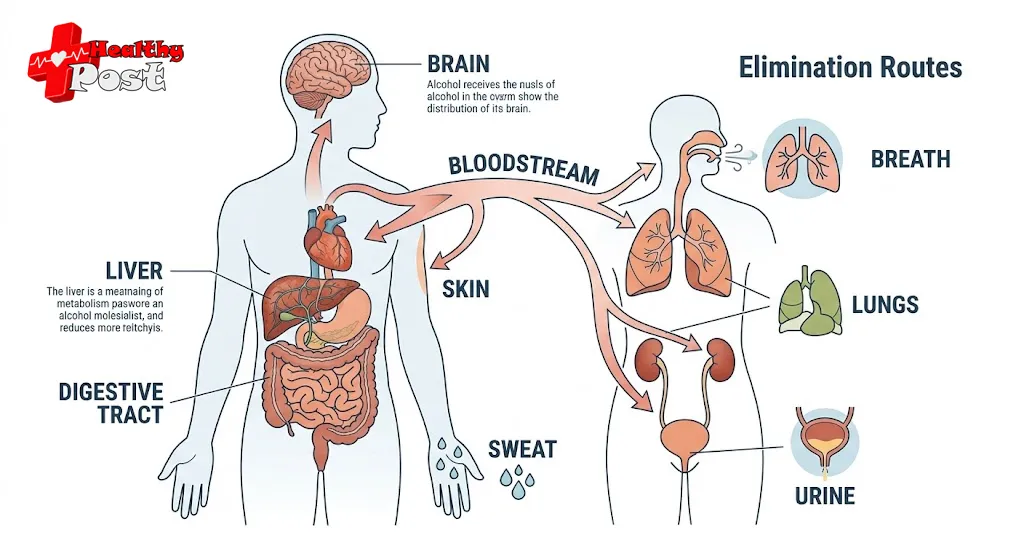
- Absorbed mainly through the stomach and small intestine
- Carried by the bloodstream to your brain and organs
- Metabolized primarily in your liver
The star of this process is an enzyme called alcohol dehydrogenase (ADH). It breaks alcohol down at a fairly steady pace.
Average metabolism rate:
- About 15–25 mg of alcohol per hour
- That equals roughly one standard drink every 60–90 minutes for many people
But this rate is influenced by:
- Age
- Body weight and composition
- Sex (women often metabolize alcohol differently)
- Food in the stomach
- Genetics and liver health
Even if you chug water, drink coffee, or eat a large meal, your metabolism speed barely changes. These things may:
- Help with hydration
- Make you feel more awake
- Reduce hangover symptoms a bit
…but they do not lower your blood alcohol concentration (BAC) faster and they do not meaningfully change how long alcohol stays in your urine.
👉 This steady metabolic rate is why you cannot “cheat time” when it comes to alcohol leaving your system.
2. Alcohol’s Half-Life Is 4–5 Hours – But Detection Lasts Much Longer
Another shocking fact: even though alcohol’s half-life is about 4–5 hours, it can still be detected after you feel sober.
Half-life means:
- It takes around 4–5 hours for your body to cut the alcohol level in your blood by 50%.
- After each half-life, the amount continues to drop by half.
However, feeling sober is not the same as being alcohol‑free:
- Your BAC may fall, but small amounts of alcohol and its metabolites remain in your body.
- These byproducts can be detected in urine and other tests long after the “buzz” is gone.
This is a key reason questions like how long does alcohol stay in urine do not have a single simple answer. It depends on:
- How much you drank
- Your metabolism
- The type of alcohol test used
- Whether you are a light, moderate, or heavy drinker
You may be shocked to learn that standard urine tests can find alcohol for up to 24 hours, and specialized tests can detect alcohol markers for 72 hours or longer after heavy drinking.
3. Only 2–5% of Alcohol Leaves Through Urine, Sweat, and Breath 😮
Most people assume alcohol is “peed out” of the body. Actually, that is only a tiny part of the story.
Once in your system, alcohol is:
- 90–98% broken down in the liver
- 2–5% removed unchanged through:
- Urine
- Sweat
- Exhaled breath
This has two big implications:
- You cannot force alcohol out by drinking lots of water.
- More water = more urine, but the metabolism rate stays the same.
- Your kidneys can only excrete the small fraction your liver has already processed.
- Breathalyzers and urine tests are surprisingly sensitive.
- Even that 2–5% is enough for accurate detection.
- Devices are designed to pick up small amounts of alcohol or its metabolites.
So even though only a small fraction of alcohol exits through breath and urine, it is still plenty to show up on tests.
4. Different Tests, Different Timelines: Why Urine Can Be Positive for Days
“Will I pass a test tomorrow?” is one of the most common concerns when people ask how long does alcohol stay in urine. To answer that, you need to know how long alcohol and its markers last in various tests.
Here is a simple comparison:
| Test Type | Typical Detection Window |
|---|---|
| Blood | Up to 12 hours |
| Breath | 12–24 hours |
| Urine | 12–24 hours, up to 72+ hours after heavy use |
| Saliva | Up to 12 hours |
| Hair | Up to 90 days |
With urine, there are two main ways testing works:
- Standard urine ethanol test
- Detects actual alcohol in the urine
- Usually positive for about 12–24 hours after your last drink
- EtG/EtS urine tests (Ethyl Glucuronide / Ethyl Sulfate)
- Detect metabolites formed when your body breaks down alcohol
- Can detect drinking 48–72 hours after moderate or heavy use
- In some heavy or chronic users, detection may last up to 4–5 days
That means:
- A night of heavy drinking on Saturday can still show up in a urine test on Tuesday.
- Even if you feel fine or “hungover but sober,” your test can still pick up evidence of recent alcohol use.
Real-life example
Someone drinks heavily at a party until midnight:
- By late morning, they might feel mostly normal.
- Their BAC may have dropped significantly.
- But an EtG urine test 24–48 hours later can still be positive.
This is why relying on how you feel is not a safe guide when it comes to testing.
5. Intoxication Starts at Low BAC Levels – Long Before You Feel “Drunk”
Another shock: you do not have to feel wasted for alcohol to damage your judgment, motor skills, or reaction time.
Here is how rising BAC levels affect the body:
- 0.05% BAC
- Mild intoxication
- Lowered inhibitions, more talkative, relaxed
- Subtle effects on coordination and attention
- 0.07% BAC
- Driving ability significantly impaired
- Slower reaction time, worse tracking, reduced judgment
- In many places, this is close to or above the legal driving limit
- 0.10% BAC
- Obvious intoxication
- Slurred speech, poor coordination, balance problems
Common signs of drunkenness include:
- Lowered inhibitions and poor judgment
- Slurred or slow speech
- Impaired coordination and stumbling
- Confusion, disorientation
- Memory gaps or blackouts
- In severe cases, breathing or heart rhythm problems
These effects are directly linked to BAC, not how long alcohol stays in urine. But detection windows matter because they capture use that may have happened:
- Before driving
- Before a workplace accident
- Before an episode of violence or self‑harm
Alcohol misuse is strongly tied to:
- Motor vehicle accidents
- Risky sexual behavior
- Violence and domestic abuse
- Suicide and homicide
Even “social drinking” can have serious consequences at relatively low BAC levels.
6. Alcohol Overdose Can Be Fatal – Especially When Mixed with Other Drugs ⚠️
One of the most serious risks of heavy drinking is alcohol poisoning, or overdose. This is not just “passing out” — it can be life‑threatening.
BAC levels and overdose risk
- 0.06–0.15% BAC
- Moderate impairment
- Clear loss of coordination
- Driving is unsafe and illegal in many areas
- 0.16–0.30% BAC
- Severe impairment
- Blackouts, vomiting, confusion
- Possible loss of consciousness
- 0.31–0.45% BAC
- Life‑threatening overdose
- Very high risk of death from suppressed breathing or heart rate
Symptoms of alcohol overdose may include:
- Extreme confusion or inability to wake up
- Stupor or unconsciousness
- Repeated vomiting
- Slow or irregular breathing
- Clammy, pale, or bluish skin
- Slow heart rate and very low body temperature
If you see these signs, treat it as a medical emergency and call emergency services immediately.
Mixing alcohol with other substances
Combining alcohol with:
- Opioids (like oxycodone, heroin, fentanyl)
- Sedatives (like benzodiazepines, sleep medications)
…dramatically increases overdose risk because all of these depress:
- Breathing
- Heart rate
- Central nervous system activity
The combination can be deadly even at doses that might seem “normal” on their own.
For more in‑depth, medically reviewed information, resources like the National Institute on Alcohol Abuse and Alcoholism provide reliable guidance on alcohol overdose and long‑term harm. You can learn more at the National Institute on Alcohol Abuse and Alcoholism.
7. Alcohol Can Be Detected Up to 90 Days – And Misuse Is Widespread 😔
Many people think alcohol disappears quickly from the body. In reality, certain tests can reveal a drinking pattern months later.
Hair tests: the longest memory
Hair follicle tests can detect markers of alcohol use for up to 90 days or more. They do not tell you how drunk someone was on a particular night but can:
- Show repeated or heavy drinking over time
- Reveal long‑term patterns relevant for:
- Court cases
- Child custody issues
- Some professional or safety‑sensitive jobs
This is one of the most surprising answers to how long does alcohol stay in urine and the body overall — your hair can carry a chemical “memory” of drinking for months.
Alcohol misuse is more common than many realize
Alcohol problems are not rare or limited to stereotypes. In the United States:
- Around 29.5 million people in 2021 were living with alcohol use disorder (AUD)
- Each year, about 140,000 deaths are linked to alcohol misuse, including:
- Liver disease and liver failure
- Drunk driving crashes
- Accidents, falls, and drownings
- Suicide and violence
These numbers highlight that alcohol is not just a casual social drink. For many, it is a serious health and safety risk.
If you or someone you love is struggling with alcohol, you are far from alone. Many people quietly question their drinking long before they reach out for help — and support is available.
Organizations such as SAMHSA offer confidential helplines and treatment locators. You can find options through the Substance Abuse and Mental Health Services Administration.

Common Myths About Alcohol and Urine Tests Busted
Misconceptions about alcohol testing are everywhere. Here are some of the biggest myths and the truth behind them.
1st Myth : “If I drink lots of water, I’ll pass a urine test.”
- Reality: Water does not speed up alcohol metabolism.
- You might dilute your urine slightly, but tests are designed to adjust for this.
- The liver still breaks alcohol down at its own pace.
2nd Myth : “Coffee or a cold shower sobers me up.”
- Reality: Caffeine and cold water may make you feel more alert.
- Your BAC and the alcohol in your system remain unchanged.
- You can still be unsafe to drive and still test positive.
3rd Myth : “A single sip cannot show up in a test.”
- Reality: Even small amounts of alcohol can appear in urine.
- Detection depends on:
- How close the test is to the time you drank
- Your metabolism
- The sensitivity of the test
For someone who rarely drinks, a few sips shortly before testing may still show as recent use.
Myth 4: “Once I stop feeling drunk, I’m in the clear.”
- Reality: You can feel sober while your BAC is still above legal limits.
- Alcohol and metabolites can remain detectable in urine for 1–3 days after heavy drinking.
- Feeling okay is not a reliable measure of safety or test readiness.
FAQs: How Long Does Alcohol Stay in Urine and the Body?
1. How long does alcohol stay in urine after one drink?
For many people:
- A single standard drink can be detectable in urine for about 12–24 hours with standard testing.
- Sensitive EtG tests may detect it a bit longer, especially in those with slower metabolism.
2. How long does alcohol stay in urine after heavy drinking?
After heavy or binge drinking:
- Standard urine tests are often positive for 24 hours or more.
- EtG/EtS tests can be positive for 48–72 hours, and sometimes longer.
3. Can exercise help me get alcohol out of my system faster?
No. Exercise may:
- Help you feel better
- Support overall health
But it does not significantly speed alcohol metabolism. Your liver still works at its own steady rate.
4. Why does alcohol stay longer in some people?
Detection times vary due to:
- Age
- Body weight
- Sex and hormones
- Liver health
- Genetic differences in metabolism
- Drinking history and tolerance
Chronic heavy drinkers may process alcohol differently and may have longer detection windows.
5. Is it safe to drive once I stop feeling drunk?
Not necessarily. Feeling sober is a poor guide. You may:
- Still have a high BAC
- Still be impaired in judgment and reaction time
- Still be at legal risk for driving under the influence
The safest rule: If you have been drinking, do not drive.
Final Takeaways: Respect the Clock, Respect Your Health 🕒
To sum up, how long does alcohol stay in urine depends on how much you drank, your body, and the type of test used. Standard urine tests often detect alcohol for 12–24 hours, while specialized tests can pick up markers for 72 hours or more, especially after heavy drinking.
Key points to remember:
- Alcohol leaves the body at a fixed metabolic rate that you cannot speed up.
- Only a small fraction of alcohol exits through urine, breath, and sweat, but it is enough for accurate testing.
- Different tests (blood, breath, urine, hair) have very different detection windows.
- Misusing alcohol increases the risk of accidents, overdose, violence, and long‑term health damage.
- Many people struggle with alcohol use, and professional help is available and effective.
If your question about how long does alcohol stay in urine comes from worry — about a test, your safety, or your drinking patterns — consider it a sign to pause and reflect. Talking with a healthcare professional, therapist, or support group can be a strong and hopeful next step. You deserve safety, clarity, and a life that is not ruled by alcohol.

1 Comment
Pingback: How to Remove a Splinter Safely: 7 Powerful Tips