


Close Menu
Healthy Post

    Subscribe to Updates

    Get the latest health information, wellness tips and expert-reviewed articles delivered straight to your inbox.

    What's Hot

    T1 vs T2 MRI: 5 Key Differences Explained

    November 3, 2026

    Lip Filler Aftercare: 8 Essential Tips for Safe Healing

    October 30, 2026

    Gay Sex and STI: 7 Infections, Symptoms, Testing, and Prevention

    October 25, 2026
    Facebook X (Twitter) Instagram
    • About Us
    • Contact Us
    • Disclaimer
    • Our Medical Review Board & Expert Contributors
    • Terms and Conditions
    • Write for Us
    • Privacy Policy
    Healthy PostHealthy Post
    • Cancer
    • Cardiology
    • Dental
    • General Disease
    • Gyne
    • Healthy food
    • Medicine
    • Orthopedics
    • Skin
    Button
    Healthy Post
    Home » What should You do if You have rectus abdominis separation after childbirth?
    Gyne

    What should You do if You have rectus abdominis separation after childbirth?

    AdminBy AdminSeptember 3, 2025Updated:September 3, 2025No Comments3 Mins Read
    rectus abdominis separation
    What should You do if You have rectus abdominis separation after childbirth?

    Still carrying a belly a year after giving birth? You’re afraid to wear sexy, pretty clothes. Say goodbye to low-rise pants and bikinis. Even though you do sit-ups every day, your baby bump is still flabby. How can you show it off to compete with the youthful bodies of other girls? The culprit is postpartum rectus abdominis separation .

    Did you know? Two-thirds of women experience abdominal separation after giving birth, and one-third still experience it a year later!

    What is rectus abdominis diastasis?

    During pregnancy, especially in the third trimester, the enlarging uterus causes the abdominal wall to expand and stretch. Postpartum, the abdominal muscles relax, and the abdominal wall loses its tension, but it doesn’t quickly return to its original position and shape, causing excess fat to accumulate and bulge. The linea alba stretches and thins, causing the two rectus abdominis muscles, which were once parallel and aligned, to separate from the linea alba. This phenomenon is called rectus abdominis diastasis.
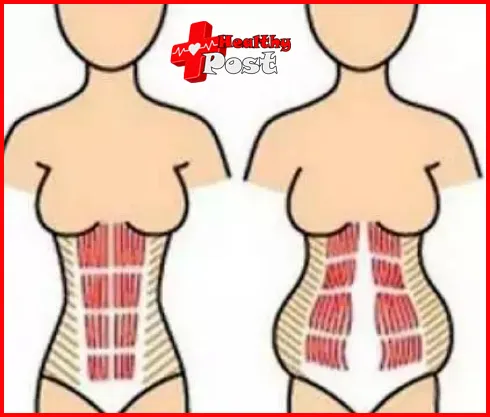
    rectus abdominis separation
    rectus abdominis separation

    The dangers of rectus abdominis separation:
    feeling like always having to go to the toilet, even after drinking water; back pain and inability to straighten up
    after a short period of movement, etc.; in
    mild cases, it may leave you with a belly that you can never get rid of; in severe cases, it may cause back injuries and stress urinary incontinence; the most serious cases may lead to hernia (human tissue detaches from its original part and enters another part through gaps, defects or weak parts of the human body) and organ displacement.

    How to self-diagnose rectus abdominis separation?
    1. Lie flat on your back with your knees bent, exposing your abdomen.
    2. Support your head with your left hand. Insert your right index and middle fingers vertically into your abdomen, relaxing your body.
    3. Lift your upper body and feel your abdominal muscles squeeze your fingers toward you. If you don’t feel a squeeze, move your fingers to the sides. Move them until you find the tight muscles. Measure the distance between the muscles on both sides.
    Self-diagnosis: A distance of less than two fingers is normal. Between two and three fingers is recommended for improvement through exercise. More than three fingers is recommended for medical attention.

    How is it treated?

    (Here, we’ll mainly introduce several self-training treatment methods for mothers.)
    1. Lie on your back: Lift your legs, tuck your chin slightly, and place your hands on the top of your right calf, keeping your waist pressed against the mat. Then, inhale to prepare. As you exhale, slowly push your right leg out. Inhale without moving, and exhale to slowly pull your leg back. You can also switch legs and do this alternately. Repeat this 6-8 times per set, 2-3 times each time.
    Note: When using your hands to support your legs, press your chest as much as possible to press your lumbar spine into the mat. Extend your other leg as far as possible while maintaining a firm grip on your lumbar spine.

    Happy Couples
    7 Surprising Health Benefits Only Happy Couples Enjoy
    Editorial Notice & Disclaimer: All material published on this platform is curated strictly for general educational and healthcare informational purposes. Content should not be interpreted as professional medical advice, official diagnosis, or a definitive treatment protocol. We strongly advise consulting a licensed physician or qualified healthcare provider regarding any specific medical concerns or health choices.
    Share. Facebook Twitter Pinterest LinkedIn Tumblr Email
    Previous Article7 Surprising Health Benefits Only Happy Couples Enjoy
    Next Article Regarding the problem of lumbar disc herniation, don’t do this anymore

    Related Posts

    Gyne

    7 Possible Signs of Infertility in Teenage Girls: When to See a Doctor

    October 14, 2026
    Gyne

    C-Section vs. Vaginal Delivery Pain: Which Recovery Is Harder?

    October 6, 2026
    Gyne

    What Is Lightning Crotch? 7 Things to Know About Pregnancy Pain

    October 2, 2026
    Add A Comment
    Leave A Reply Cancel Reply

    You must be logged in to post a comment.

    Recent Posts
    • T1 vs T2 MRI: 5 Key Differences Explained
    • Lip Filler Aftercare: 8 Essential Tips for Safe Healing
    • Gay Sex and STI: 7 Infections, Symptoms, Testing, and Prevention
    • Moxi Laser Treatment: 7 Benefits, Side Effects, and Recovery Tips
    • Symptoms of E Coli Bacteria: 7 Key Signs to Know
    Top Posts

    Why Does My Knee Click But No Pain? 5 Harmless Causes (and 4 Red Flags)

    June 6, 20262 Views

    T1 vs T2 MRI: 5 Key Differences Explained

    November 3, 20260 Views

    Lip Filler Aftercare: 8 Essential Tips for Safe Healing

    October 30, 20260 Views
    Latest Reviews

    Our Medical Board

    Our health platform content is written, reviewed, and vetted by a dedicated board of licensed clinicians and specialists to guarantee clinical accuracy.

    • Dr. Rachana Bhoite
      Dr. Rachana Bhoite Nutrition Science Dr. Reddy's Labs ↗
    • Dr. Priyanka Agarwal
      Dr. Priyanka Agarwal Dermatologist Dakai Skin Clinic ↗
    • Dr. Himanshu Gupta
      Dr. Himanshu Gupta Orthopedics & Robotics Amicare Hospital ↗
    • Dr. Michelle Uzor
      Dr. Michelle Uzor OB-GYN Southern Crescent ↗
    • Dr. Kamlesh Verma
      Dr. Kamlesh Verma Surgical Oncology Max Hospital ↗
    • Dra. Ana Escobar
      Dra. Ana Escobar Pediatrician FMUSP / Official ↗
    • Dr. Mary Jacob
      Dr. Mary Jacob Registered Pharmacist Goulburn Valley Health ↗
    • Dr. Mohanned Alghamdi
      Dr. Mohanned Alghamdi Esthetic & Restorative UniDents Clinic ↗
    • Dr. Neha Sood
      Dr. Neha Sood Otolaryngologist (ENT) BLK-Max / Sir Ganga Ram ↗
    • Dr. Sarita Rao
      Dr. Sarita Rao Interventional Cardiology Apollo Hospitals ↗
    • Dr. Martha Isabel Junio Parroco
      Dr. Martha Parroco Gynecologic Oncology Clinical Research
    • Dr. Chiara Del Prete
      Dr. Chiara Del Prete Urology & Oncology AST Pesaro Urbino ↗
    • Harpreet Kaur
      Harpreet Kaur Physiotherapist Anatomie ↗
    • Dr. Mohammad Kamruzzaman
      Dr. Mohammad Kamruzzaman Plastic & Reconstructive Dhaka Medical / Ibn Sina ↗
    healthypost medical board invitation
    Three doctors discussing medical information – join the HealthyPost Medical Review Board.
    Join our Medical Review Board.
    Contact: [email protected]
    Facebook X (Twitter) Instagram Pinterest
    • About Us
    • Contact Us
    • Disclaimer
    • Our Medical Review Board & Expert Contributors
    • Terms and Conditions
    • Write for Us
    • Privacy Policy
    © 2026 Healthy Post. All Rights Reserved.

    Type above and press Enter to search. Press Esc to cancel.