


Medical Accuracy Verified
This article has been written and clinically verified by Dr. Sana Lodhi, MBBS.
Medical Disclaimer: The content on Healthy Post is for educational and informational purposes only. Utilizing a specialized types of kidney stones chart is an excellent clinical resource to identify the primary variations of calculi—such as calcium oxalate, uric acid, struvite, calcium phosphate, and cystine. However, determining the exact biochemical pathways behind stone formation requires a laboratory 24-hour urine collection analysis and metabolic screening. Dietary and medical interventions must vary specifically based on stone composition; what prevents one variant can inadvertently exacerbate another. Always consult a qualified urologist, nephrologist, or primary healthcare provider for individual diagnostic testing and personalized prevention protocols.
If you or someone you love has ever doubled over with sudden side pain, a types of kidney stones chart can make a confusing diagnosis feel much easier to understand. Kidney stones are common, painful, and often unexpected. Yet once you know what type of stone is involved, the picture becomes clearer. You can better understand risk factors, likely causes, and the best prevention steps moving forward.
Kidney stones are not all the same. Some form from excess calcium. Others develop because of uric acid, infections, or rare inherited conditions. The treatment often depends more on stone size than stone type. Still, knowing the stone’s composition matters because prevention is where real progress happens. 🩺
This guide explains the types of kidney stones, what they look like, who gets them most often, and what to do next. It also includes an actual types of kidney stones chart you can refer to when discussing results with a doctor.
1. What kidney stones are and why they matter
Kidney stones, also called renal calculi, are solid deposits made of minerals and crystals that form in the kidneys. Think of them like tiny rock-like clusters that develop when the urine becomes too concentrated. Over time, those crystals stick together and grow.
For some people, a stone remains small and passes without much trouble. For others, it can block the urinary tract and cause intense pain. That pain often begins in the back or side and may move toward the groin. It can come in waves and may lead to nausea, vomiting, or blood in the urine.
Common symptoms of kidney stones
- Sharp pain in the back, side, or lower abdomen
- Pain that comes in waves
- Burning during urination
- Blood in the urine
- Nausea or vomiting
- Trouble passing urine
- Frequent urge to urinate
A kidney stone episode can feel sudden and frightening. Many people end up in the emergency room because the pain is so severe. In that moment, one of the first questions is simple: what kind of stone is this?
Who is more likely to get kidney stones?
Several risk factors raise the odds:
- Family history of stones
- Dehydration
- Diets high in salt, sugar, or animal protein
- Obesity
- High blood pressure
- Diabetes
- Certain digestive disorders
- Genetic conditions such as cystinuria
If you have had one stone before, your chance of getting another can rise. That is why knowing the types of kidney stones and causes is not just academic. It helps guide long-term prevention.
2. How many types of kidney stones are there?
A common question is: how many types of kidney stones are there?
There are four main types of kidney stones:
- Calcium stones
- Uric acid stones
- Struvite stones
- Cystine stones
Calcium stones are divided into two common subtypes:
- Calcium oxalate
- Calcium phosphate
That means many charts list five rows, even though there are four major categories overall. This is useful because calcium oxalate and calcium phosphate stones do not behave exactly the same way.
Why the type matters
The stone type helps answer key questions:
- Why did the stone form?
- What foods or habits may trigger another one?
- What lab changes should doctors monitor?
- Which prevention strategies make the most sense?
Treatment for the current stone usually depends on size and location. Prevention for the next stone depends more on composition.
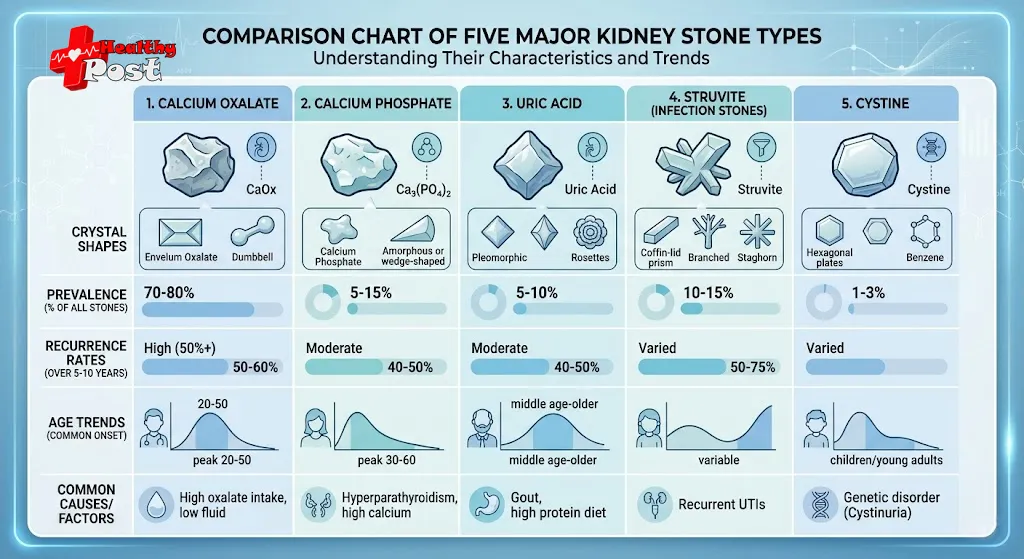
3. Actual types of kidney stones chart
Below is an actual types of kidney stones chart based on the summary data you provided. It offers a practical snapshot of appearance, prevalence, age trends, sex ratio, and recurrence rate.
Types of kidney stones chart
| Type | Appearance | Prevalence (U.S.) | Typical Age | Men:Women Ratio | Recurrence Rate |
|---|---|---|---|---|---|
| Calcium Oxalate | Envelope or dumbbell-shaped | 61% | Any age, mean late 40s | 2:1 | 38% |
| Calcium Phosphate | Amorphous or wedge-shaped rosettes | 15% | Any age, mean early 40s | 1:2 | 43% |
| Uric Acid | Rhomboid-shaped | 10–15% | 60–65 years | 4:1 | 51% |
| Struvite | Coffin-lid-shaped | 5–15% | Any age, mean early 50s | 1:3 | 41% |
| Cystine | Hexagon-shaped | 1–2% | 0–20 years | 2:1 | 89% |
This types of kidney stones chart highlights several important patterns.
What stands out in the chart?
- Calcium oxalate stones are the most common by far.
- Cystine stones are the least common but recur the most.
- Uric acid stones are more common in older adults.
- Struvite stones affect women more often than men.
- Calcium phosphate stones also show a higher rate in women.
For a broader medical overview of kidney stones, the National Institute of Diabetes and Digestive and Kidney Diseases offers a reliable patient resource.
4. Calcium stones: the most common type
When people discuss the types of kidney stones, calcium stones usually lead the conversation. They account for most cases and come in two major forms.
Calcium oxalate stones
Calcium oxalate stones make up about 61% of cases in the U.S. They can occur at any age, though the average patient is often in the late 40s. Men are affected more often than women.
These stones form when calcium combines with oxalate in the urine. Oxalate is a natural substance found in some foods and also produced by the body.
Common contributors
- Low fluid intake
- High oxalate foods
- High sodium intake
- Low citrate levels in urine
- Too much calcium released into urine
Foods higher in oxalate
- Spinach
- Nuts
- Beets
- Chocolate
- Sweet potatoes
That does not mean everyone must avoid these foods completely. Context matters. A person with calcium oxalate stones may need targeted dietary changes, not a harsh restriction plan.
Calcium phosphate stones
Calcium phosphate stones account for around 15% of cases. They can also occur at any age, with an average onset in the early 40s. Women are affected more often than men.
These stones are often linked with alkaline urine and certain metabolic conditions. They may also appear in people with specific kidney tubular disorders.
Prevention for calcium stones
General prevention often includes:
- Drinking enough water to keep urine diluted 💧
- Limiting excess salt
- Avoiding too much animal protein
- Keeping calcium intake moderate, not extremely low
- Reviewing oxalate intake if calcium oxalate stones are confirmed
This point surprises many people: cutting calcium too much can backfire. Moderate dietary calcium can actually help by binding oxalate in the gut.
For a trustworthy overview of kidney stone causes, Mayo Clinic explains common triggers and risk factors clearly.
5. Uric acid stones: often tied to diet and urine acidity
Uric acid stones make up about 10% to 15% of kidney stones. They are more common in men and often appear later in life, usually between ages 60 and 65.
Unlike calcium stones, uric acid stones often form when urine is too acidic. They are also associated with high levels of uric acid, which can be linked to diet, metabolism, or conditions such as gout.
Common causes of uric acid stones
- High intake of animal protein
- Purine-rich foods
- Chronic dehydration
- Acidic urine
- Metabolic syndrome
- Gout
Foods rich in purines include:
- Red meat
- Organ meats
- Shellfish
- Some fish
A practical example: a person who eats large amounts of meat, drinks too little water, and has a history of gout may be at greater risk.
Prevention for uric acid stones
Doctors often suggest:
- Drinking more fluids
- Reducing animal protein
- Limiting purine-rich foods
- Raising urine pH when needed through medical guidance
This is one reason the types of kidney stones and causes should always be reviewed together. The same prevention plan does not fit every patient.
6. Struvite stones: closely linked to infections
Struvite stones are less common overall, making up around 5% to 15% of cases. They are often associated with urinary tract infections, especially infections caused by bacteria that change urine chemistry.
These stones can grow quickly and become large. In some cases, they fill part of the kidney’s collecting system, which makes early detection especially important.
Why struvite stones develop
Struvite stones usually form in alkaline urine during certain bacterial infections. Women are affected more often than men, partly because urinary tract infections are more common in women.
Warning signs
Struvite stones may cause:
- Flank pain
- Fever
- Chills
- Cloudy urine
- Recurrent urinary tract infections
Some patients may not notice symptoms until the stone becomes large. That can make these stones tricky.
Prevention for struvite stones
The main prevention goal is simple but important:
- Prevent and treat urinary tract infections promptly
That may involve:
- Timely medical evaluation
- Completing prescribed antibiotics
- Follow-up urine testing when infections keep returning
If someone keeps getting infections and stones, a doctor may look deeper for structural or chronic causes.
For patient-friendly guidance on kidney stone symptoms, MedlinePlus provides dependable public health information.
7. Cystine stones: rare, genetic, and highly recurrent
Cystine stones are rare, accounting for only 1% to 2% of kidney stones. Yet they have the highest recurrence rate, reaching up to 89%. That makes them especially important to recognize.
These stones result from a genetic condition called cystinuria. In this disorder, the kidneys leak too much cystine into the urine. Cystine does not dissolve well, so crystals can form and grow into stones.
Who gets cystine stones?
Cystine stones often appear early in life, sometimes in childhood or adolescence. The chart shows a typical age range of 0 to 20 years.
Why recurrence is so high
Because cystinuria is inherited, the underlying cause does not disappear. That means prevention must be ongoing and consistent.
Prevention for cystine stones
People with cystine stones may need:
- Very high fluid intake
- Medicines to raise urine pH
- Additional medications to reduce cystine stone formation
- Regular follow-up with specialists
A short example: a teenager with repeated stones may not just be “unlucky.” A genetic explanation could be the missing piece.
8. How kidney stones are diagnosed
A person may know they have pain. They may even suspect a stone. But diagnosis requires more than symptoms alone.
Imaging tests
Doctors often use imaging to confirm a stone and assess its size, shape, and location.
Common tests include:
- X-ray
- CT scan
These tests help answer urgent questions:
- Is the stone blocking urine flow?
- How large is it?
- Where exactly is it located?
Lab tests
Urinalysis and blood tests can reveal important clues.
Doctors may check for:
- Calcium
- Phosphorus
- Uric acid
- Signs of infection
- Blood in the urine
Stone analysis
If a stone is passed or removed, it can be analyzed in a lab. This step is extremely valuable. It moves the discussion from guesswork to evidence.
Stone analysis helps doctors predict recurrence and tailor prevention steps. In many cases, that is the bridge between one painful episode and a smarter long-term plan.
9. Treatment depends more on size than type
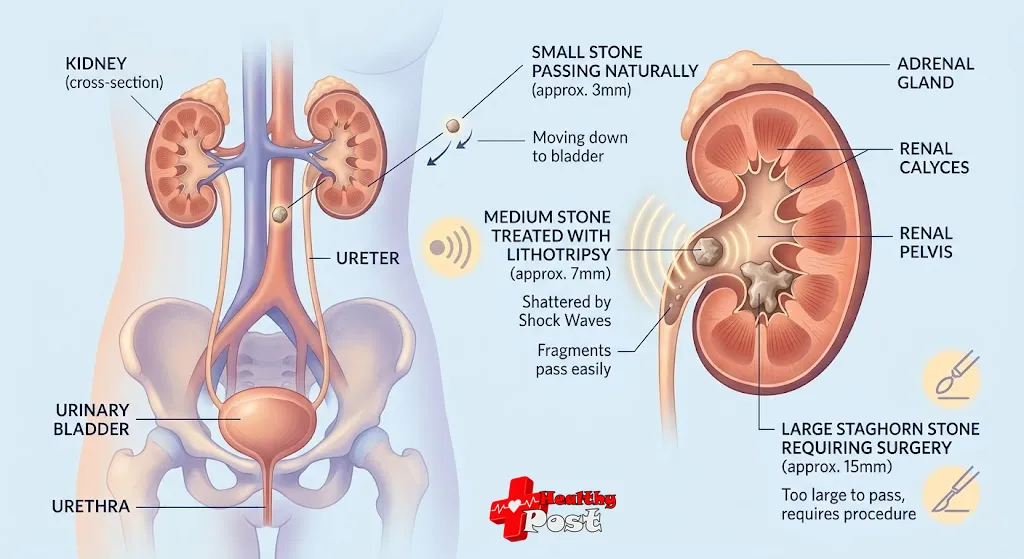
One of the most useful facts in any types of kidney stones chart is not about shape. It is about what comes next. While stone composition matters for prevention, treatment of the current stone usually depends on its size, along with its location and whether it causes blockage or infection.
Small stones: usually under 3–4 mm
Small stones often pass on their own within four to six weeks.
Typical care includes:
- Drinking more fluids
- Pain management
- Controlling urine acidity when needed
- Medical follow-up
These weeks can feel long. Some people pass a stone with mild discomfort. Others need close care because pain comes in waves.
Medium stones
When a stone is too large to pass comfortably, doctors may recommend lithotripsy.
Lithotripsy
This treatment uses shock waves to break the stone into smaller pieces. Those pieces can then pass more easily through the urinary tract.
It is less invasive than surgery and often useful for medium-sized stones.
Large stones
Large stones may require procedures to remove or break them up directly.
Cystoscopy or ureteroscopy
A doctor uses a small scope through the urinary tract to reach the stone. The stone may be removed or broken into smaller fragments.
Percutaneous nephrolithotomy
This is often used for very large stones. It involves surgical removal through a small incision in the back.
When urgent treatment is needed
Prompt medical care matters if there is:
- Fever
- Infection
- Inability to urinate
- Severe vomiting
- Uncontrolled pain
- Signs of kidney damage
In those cases, waiting it out is not the safe option.
10. Prevention strategies that support better health
Prevention is where patients can regain a sense of control. After a painful episode, many people want to know what they can do differently. The answer is not always dramatic. Often, it begins with steady daily habits.
General prevention steps for most stone types
- Drink plenty of water each day 💧
- Follow a DASH-style eating pattern
- Keep calcium intake moderate
- Reduce excess salt
- Maintain a healthy weight
- Stay active
- Manage blood pressure and diabetes
Hydration matters most. If urine stays concentrated, crystals form more easily. A simple way to think about it: your kidneys prefer flow, not stagnation.
Stone-specific prevention tips
For calcium stones
- Avoid excess oxalate-rich foods if advised
- Limit sodium
- Keep calcium intake balanced
Uric acid stones
- Reduce animal protein
- Limit purine-rich foods
- Work on urine pH under medical guidance
For struvite stones
- Prevent urinary tract infections
- Seek care early when symptoms begin
For cystine stones
- Drink large amounts of water
- Take prescribed medications
- Monitor urine pH regularly if recommended
The overlap in prevention is reassuring. Most people benefit from better hydration and a balanced eating pattern, no matter the stone type.
11. Key facts to remember from the chart
A clear summary helps when the details feel heavy.
Essential takeaways
- The most common stone is calcium oxalate.
- The most recurrent stone is cystine.
- There are four main types, with calcium stones split into two common forms.
- Current treatment depends mainly on stone size, not stone type.
- Prevention varies slightly based on stone composition.
- Stone analysis can guide smarter long-term care.
If you have ever wondered how many types of kidney stones are there, the answer is four main groups, but five common chart entries.
FAQs
1. What is the most common type of kidney stone?
Calcium oxalate is the most common type. It accounts for about 61% of cases in the U.S.
2. Which kidney stone has the highest recurrence rate?
Cystine stones have the highest recurrence rate, reaching up to 89%.
3. Do doctors treat different stone types differently?
Prevention changes by stone type. Immediate treatment usually depends more on stone size and location.
4. Can drinking water really help prevent kidney stones?
Yes. Staying well hydrated helps dilute urine and lowers the chance of crystal formation.
5. Are kidney stones always caused by diet?
No. Diet is one factor, but genetics, dehydration, infections, obesity, and medical conditions also matter.
6. Why is stone analysis important?
It confirms the stone’s composition and helps doctors choose the best prevention strategy for future stones.
Conclusion
A kidney stone can feel like a sudden storm. It disrupts routines, causes severe pain, and raises urgent questions. But understanding the types of kidney stones chart can turn fear into clarity. It shows which stones are most common, which recur most often, and why prevention should be tailored to the individual.
The biggest lesson is this: treatment often depends on size, while prevention depends on composition. That distinction matters. Whether the issue is calcium oxalate, uric acid, struvite, or cystine, the right plan starts with accurate diagnosis and steady follow-up.
If you have had symptoms, passed a stone, or received imaging results, talk with a qualified clinician about stone analysis and prevention. A well-used types of kidney stones chart is more than a table. It is a practical tool for better decisions, fewer recurrences, and stronger kidney health over time. 💙
What is the most common type of kidney stone?
Calcium oxalate is the most common type. It accounts for about 61% of cases in the U.S.
Which kidney stone has the highest recurrence rate?
Cystine stones have the highest recurrence rate, reaching up to 89%.
2 Comments
Pingback: How to Pass a 4mm Kidney Stone Fast: Timeline & Advice
Pingback: Early Signs of Lupus: 7 Crucial Symptoms to Watch For (2026 Guide)